
In 1981 the Rubik's Cube was everywhere. Millions were sold, but hardly anyone could solve it: there was no internet and no videos, and the few solutions going around were hard to understand. That year, one of the books that taught the most people to solve it was written by a 13-year-old London schoolboy: Patrick Bossert.
From a skiing holiday to the bookshops
Patrick discovered the cube in the spring of 1981, during a skiing holiday with his family in Switzerland. Within a few days he managed to solve it on his own. Back in London, he started explaining his method to his schoolmates with some instruction sheets, and the idea eventually reached the publisher Penguin.
His book, You Can Do the Cube, came out that same year in Puffin, Penguin's children's imprint. It was a huge success: most sources talk about more than a million and a half copies sold, and Patrick went from schoolboy to best-selling author, with interviews on television and in the press.
In this video, published in 2012 in a series about the 80s, Patrick himself tells how he lived it:
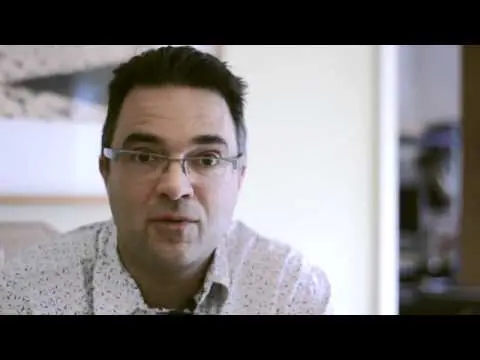
The start of the video is a bit strange, but it's worth sticking with it.
What his method was like
The book solved the cube in stages: first the corners of one face, then its edges, then the remaining corners and, finally, the remaining edges. Each stage had its own move sequences, which he called "tricks". It was printed in black and white, so the colors were shown with patterns, and the moves were indicated with his own symbols.
Seen today, it's a long method: it has more than thirty sequences and some of them are over twenty moves long. But it had something that made it a hit: it was written by a kid, for kids, and it explained every step without taking anything for granted.
A story that sounds familiar
When I learned to solve the cube, I also started teaching it to my classmates with my own method (I tell the story in About me). And that's what I keep trying to do on this website: make the solution easy to understand without having to learn a complicated notation first. That's why our Rubik's Cube solution explains every step with drawings, in 7 steps and with few moves to memorize.
What happened to Patrick Bossert?
Patrick kept his love of solving problems, but in a different field: according to his publisher, he went into management consulting and became strategy director at a large technology company. His book can still be found second-hand and as an e-book, and it's a little gem for collectors of Rubik's Cube history.
If you're interested in that history, you'll like to know that even the inventor of the cube had a hard time: it took Erno Rubik over a month to solve his own puzzle.